
Table of Contents
Bracket Placing Rules
Concept
The basic idea behind so-called bracket placement rules is that the position of the bracket relative to the crown in malocclusion is reproducibly specified by the vertical¹ incisal edge distance along the facial clinical crown axis FACC. This value can be fix or calculated variably from parameters such as crown heights, distance to other reference crowns or other measures. Among other things, distance rulers (e.g., the "Bantleon ruler") are used as placement aids.
In the FA_Bonding module, various such placement rules can be selected and applied for the initial placement of the selected virtual bracket.
- OnyxCeph³™
- MBT
- Muchitsch
- Creekmore
- Andrews
- Alexander
In addition, the user can define multiple sets for his own fix bonding distances and save or apply them under its own name.
| Variable Placement Rules | ||
|---|---|---|
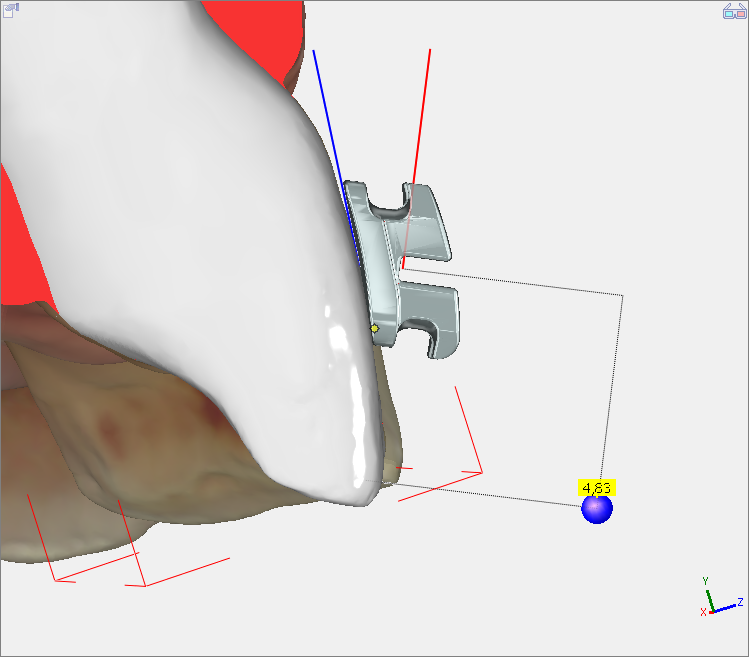 | 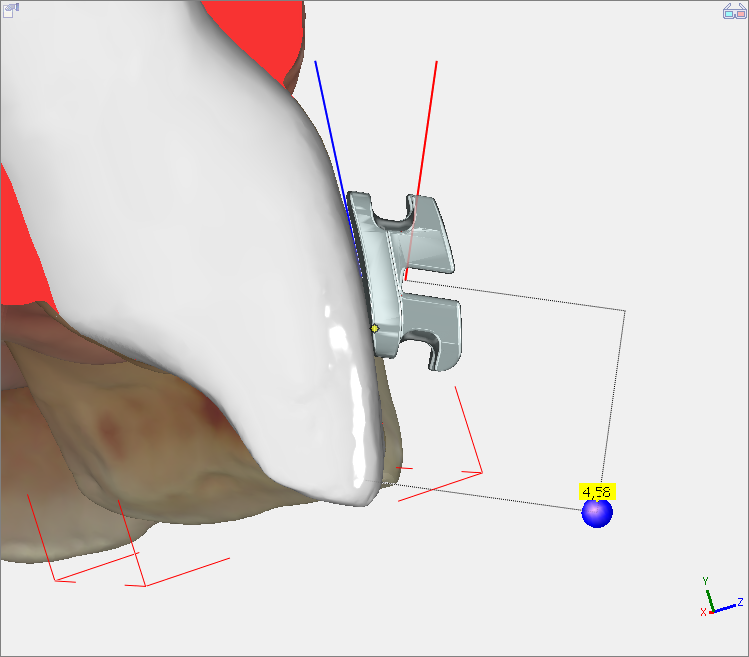 | 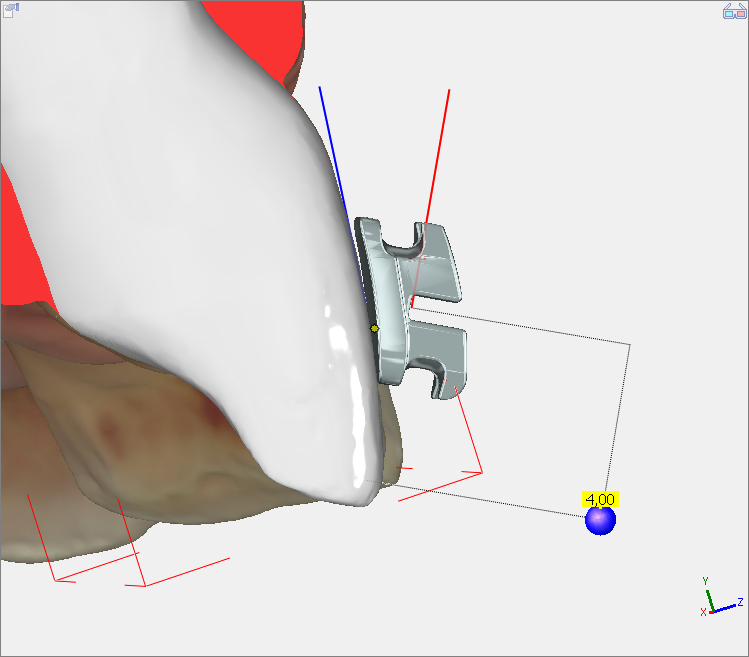 |
| OnyxCeph³™ | Andrews | Alexander (4mm Prämolar) |
| Fix Placement Rules | ||
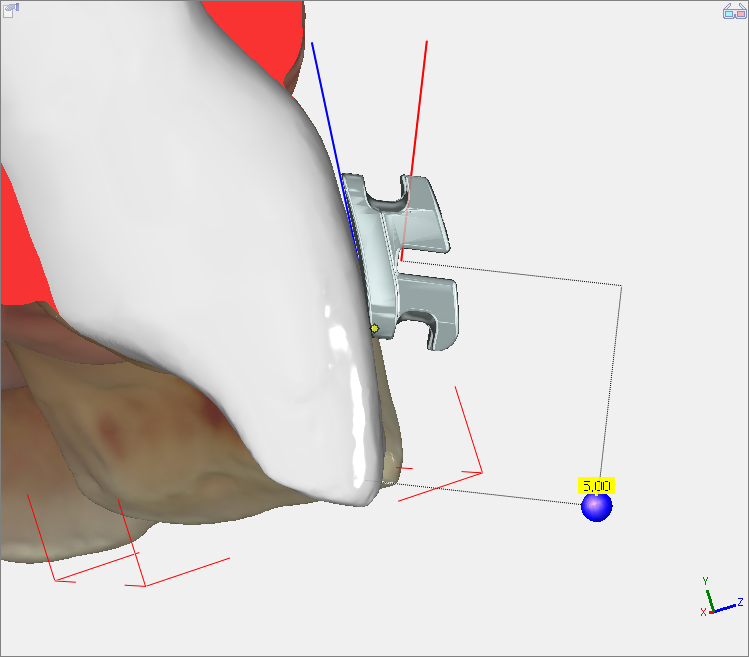 | 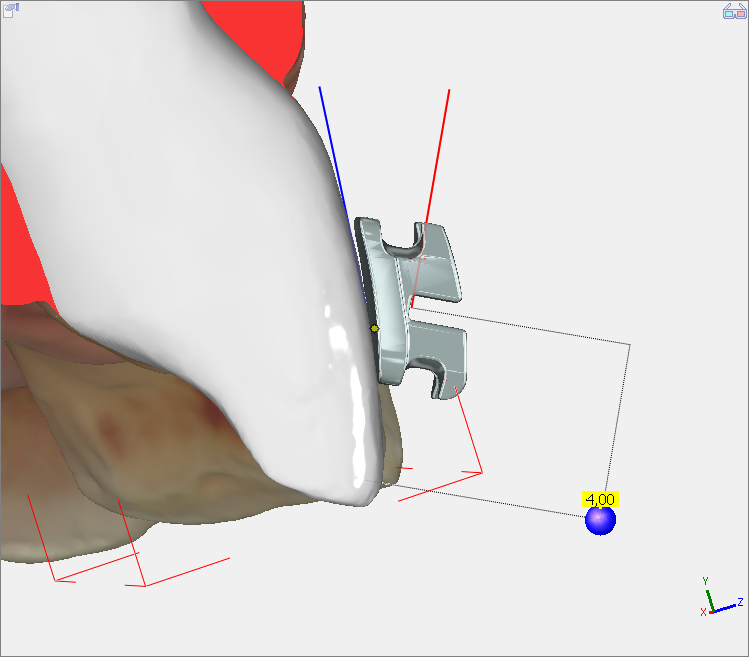 | 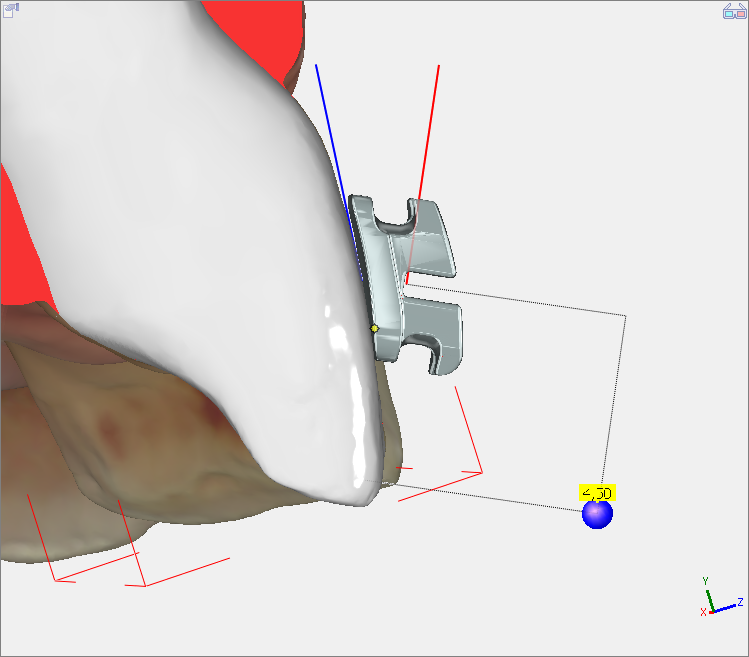 |
| MBT | Muchitsch | Creekmore |
———
¹ perpendicular to the bracket slot
Challenge
When applying this widely used methodology, it is often ignored that the crown-centered measurement of the perpendicular¹ (projected) incisal edge distance is not unique, but depends on the direction of measurement (i.e., the angle between the slot-parallel distance ruler and the FACC).
In der Praxis wird diese Winkel vor dem Hintergrund der unbewussten Validierung durch den erfahrenen Behandler meist so eingestellt, dass die finale Klebehöhe den Anforderungen der Straight-Wire-Technik bestmöglich entspricht.
Often, finding the optimum bonding height via the variation of the alignment is also supported by the fact that there is the best possible fit between the crown and the bracket base. However, this is only the case if the patient's individual crown shape largely matches the model crown shape used for the design of the bracket base.
| Identical incisal edge distances | ||
|---|---|---|
 | 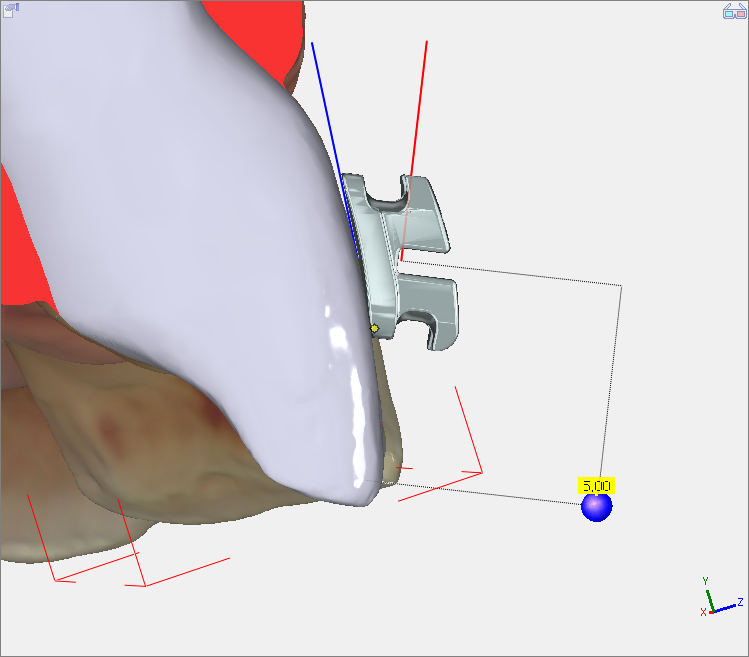 | 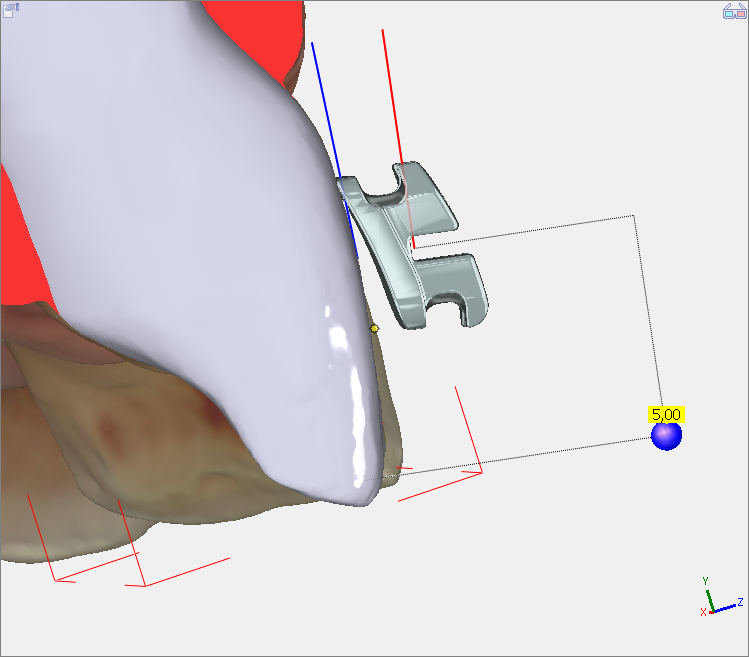 |
| 5,0 mm | 5,0 mm | 5,0 mm |
Consequences
Since the optimal bracket position for the straight-wire technique is not clearly defined by bonding rules, it must be possible to correct or adjust this variable based on the dentist's experience, even with digitally implemented indirect bonding, if the individual tooth shape deviates from the bracket manufacturer's template.
Initially, the position on the crown axis FACC is set in which there is the best possible fit between the bracket base and crown shape. This initial bonding position can be individualized by varying the contact angle around the incisal point.
| Adjusting the bracket base |
|---|
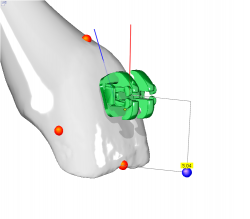 |
| incisal edge distance 5,04 mm |